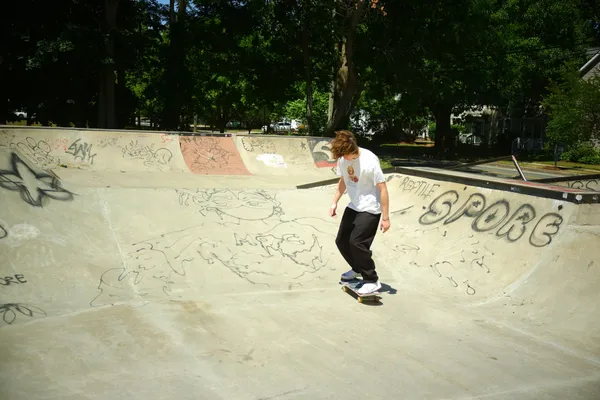
I had been looking at the same edge for a while when someone began using a different part of the spot. Their approach crossed the area I had mentally treated as empty. A patch of concrete became a place to begin, and the ledge I had been studying became something to pass beside.
Watching from the side, I could see the whole path without having to decide what I would do along it. The movement gave a sequence to details that had looked unrelated. A turn near one end changed the angle of what followed. The open space in the middle had a purpose I hadn’t considered when I first arrived.
I moved my board closer to the wall. It had been sitting in what looked like an unobtrusive place, at least according to the version of the spot I was carrying in my head. Another person’s movement had made the position less convenient. After shifting it, I could return to watching without keeping track of the object at the edge of my attention.
There’s something pleasant about the pause before a turn, especially once the uncertainty of arriving has passed. You recognize a few faces and begin to understand where people tend to wait. A conversation may continue beside you. You can look toward the part of the spot that interests you, then let somebody else draw your attention away from it.
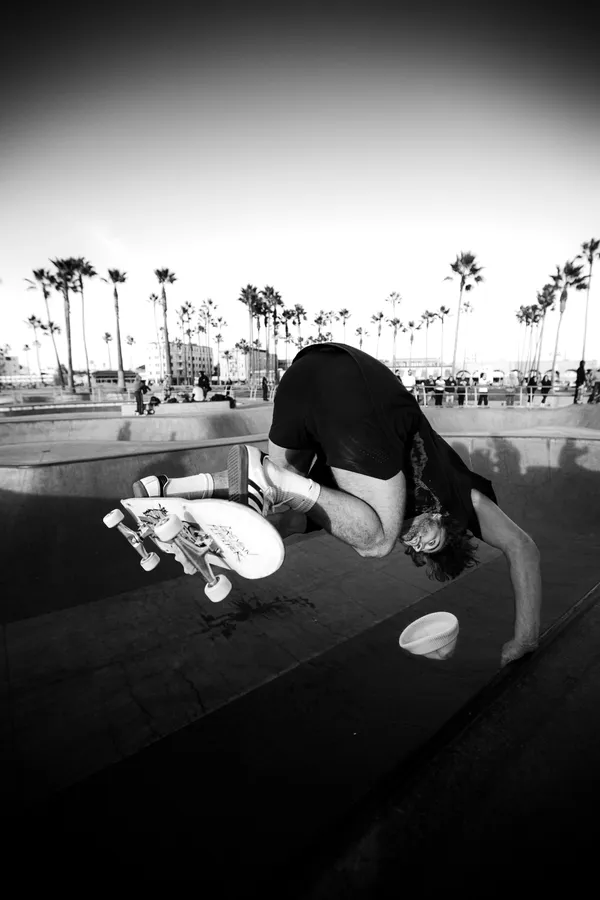
Photographs of skating often hold one person clearly while leaving other figures nearer the edges. I spend a lot of time looking at those figures. Someone has a board under an arm. Another is turned toward a movement outside the frame. Their positions suggest how much of the session has been happening in places the camera can’t include all at once.
In person, attention is even less orderly. I can be following an approach and miss how it ends because something nearer has interrupted the view. Somebody beside me sees a different part and begins describing it. We look again as the person returns to their starting point, each now aware of a detail the other had noticed.
The person whose line first caught my attention has put their board down beside the wall. From there, they are watching somebody else. I recognize the position because I’ve just left it, and turn once more toward the space we’ve both been considering.
Eventually there’s room for my own turn. I step away from the wall with a slightly different picture of the place. The edge I had been studying is still there, but it now belongs to a larger arrangement. I can see where another approach begins beside it, and leave that stretch of concrete clear as I move forward.