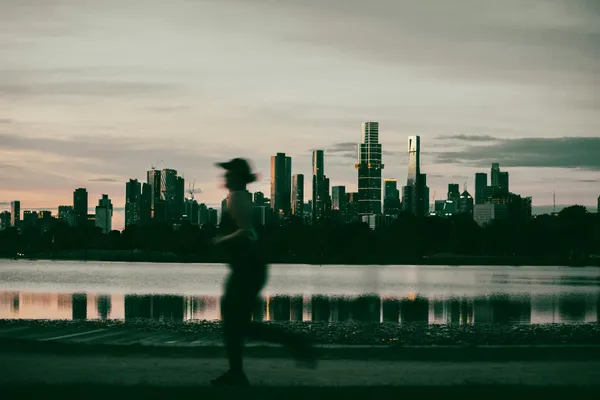
A painted line can hold a surprising amount of my attention while I am running. It comes into view, follows the direction I am moving, and disappears beneath another surface or around a bend. I look up, take in a much larger part of the street, and then find another small mark on the ground to follow for a moment.
This makes the city arrive in uneven pieces. A doorway can be familiar for weeks before I notice the building above it. A bridge I can picture clearly may have an approach that I remember only through the change of surface. The parts I recognize most easily are often the ones that happen to meet my attention at the same point in a repeated route.
The images gathered here consider some of those relationships from different places. A path and a track can share a strong curve without belonging to the same outing. A strip of paint can give a broad surface a direction, while a shadow interrupts that direction and makes the ground feel divided. Looking at the photographs together gives me time to notice arrangements I would pass through quickly in use.
Underfoot and ahead
I notice surfaces most when they change. A smooth stretch ends, a seam appears, or the color of the ground shifts near a crossing. These changes give the route a rough sequence that I can remember without drawing it. If someone asks where I have been, I may describe a turn by the surface beside it before I remember the name of the street.
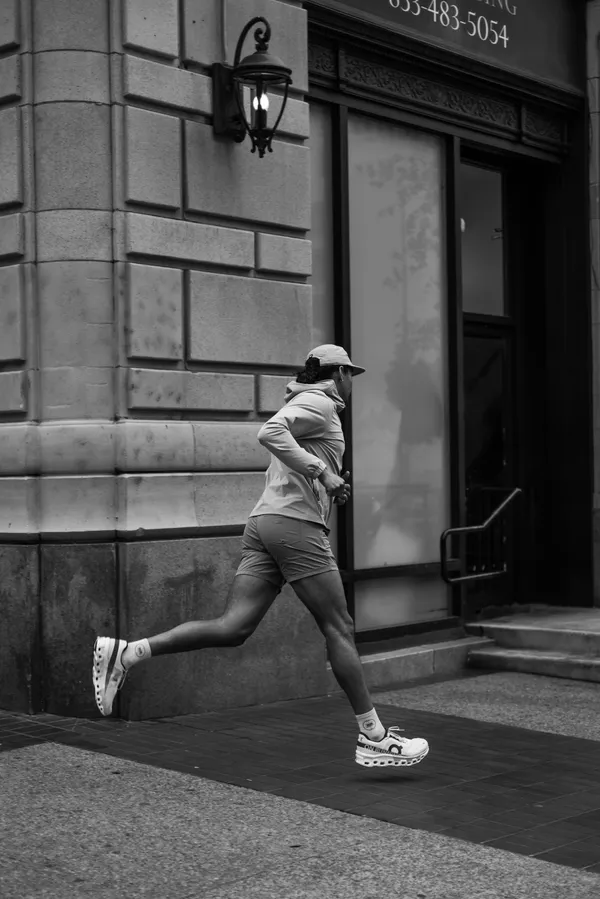
Running through a place also changes which parts of its scale remain available. A long wall can occupy several moments of a run, appearing almost unchanged while small details move past. A doorway interrupts it. A shadow reaches across the ground. In a photograph, those different intervals share a single frame, and I can see how much the wall has been doing to organize the view.
A familiar route has places I recognize through movement before I can describe them clearly. A surface changes, a wall opens at one side, or the light comes from a different direction. The city becomes a sequence of these small arrivals, repeated often enough to feel ordinary.
A crossing interrupts the visual sequence. Broad bands of paint cut across the direction I have been following, with another set of lines continuing beyond them. When I return with a camera, those competing directions become part of the composition. The surface offers more than one way for the eye to move through the frame.
I sometimes return to those places with a camera. It can be difficult to recover what interested me. Standing at ease beside a path, I see more objects and lose the particular sequence that made one of them stand out. I change position, wait for a person to pass, and try to find a frame that holds some suggestion of movement beyond its edges.
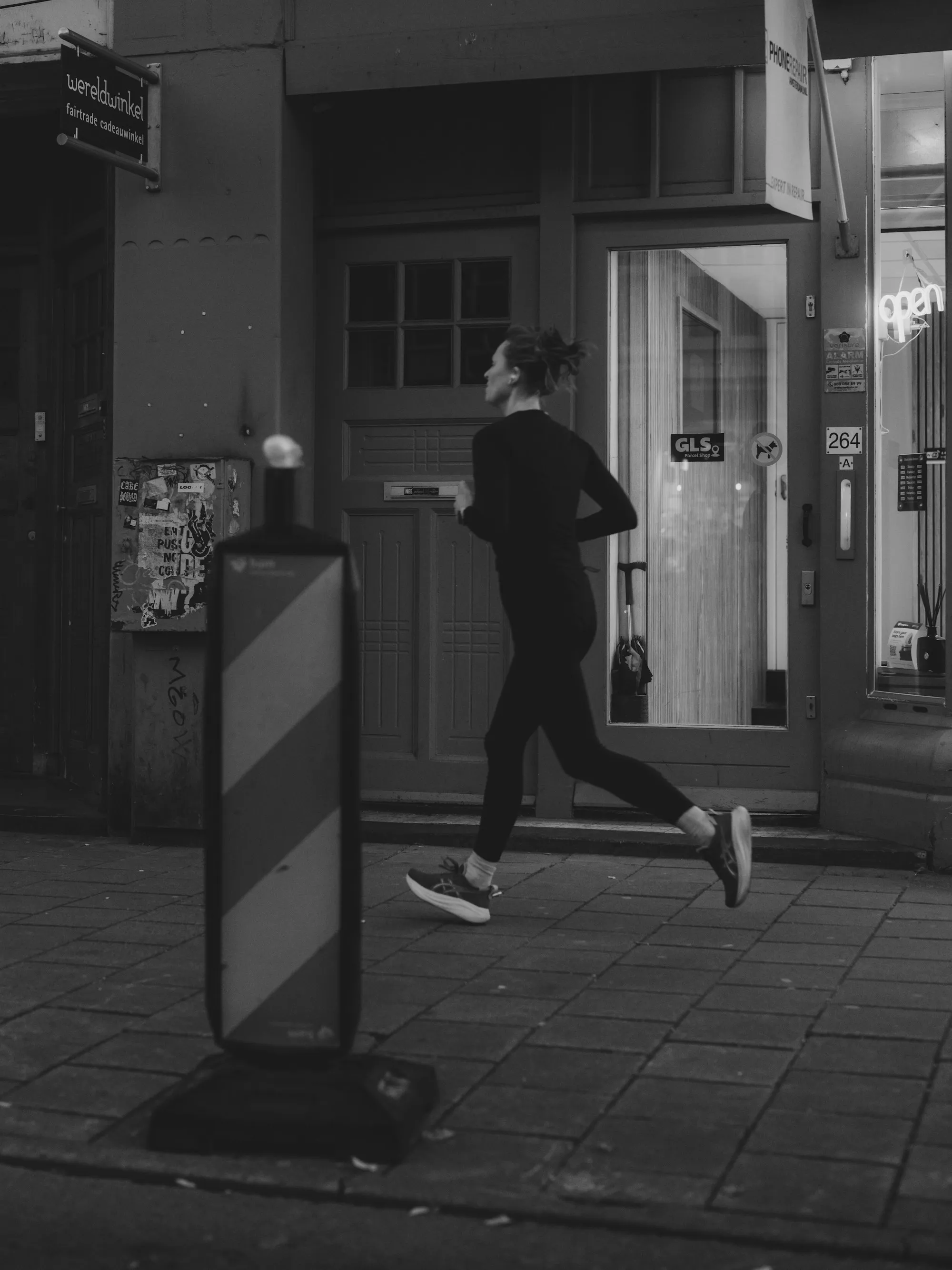
The photographs that work for me often have a clear place for the eye to continue. A line goes out of sight. A path becomes smaller near the far side of the frame. A person is moving through a shape that was already there before they arrived. These visible relationships make the still picture feel connected to time without requiring a dramatic moment.
The same place, another light
Light can make an ordinary stretch difficult to recognize. A wall I think of as pale turns dark in a broad area of shade. A narrow strip of sun gives a familiar curb a sharper edge. I have occasionally looked at a photograph of somewhere I pass often and needed a moment to place it because the light has changed which parts seem important.
That uncertainty is one reason I like returning to an ordinary route. There is enough familiarity to notice a difference, and enough movement in the surrounding city to keep the view unsettled. A delivery occupies a doorway. People gather in a place that was empty yesterday. A window reflects a bright patch of sky across a wall I usually barely see.
The route is also full of other people’s routes. Someone crosses the path I am following on their way to a bus stop. A bicycle passes through the far end of the view. The same corner belongs to a person waiting with a bag and to someone already disappearing around it. I enjoy the way a photograph can hold those separate directions within one small piece of space.
I find it useful to look at a set of images after the details of a particular run have faded. The photographs let the surfaces be considered in their own right. A curve, a patch of worn paint, and the edge of a shadow can hold the picture together without needing to become landmarks on a route that another person is expected to repeat.
On the next outing, I will probably notice something else. The line I have been following may be hidden by the light, or a person ahead of me may draw my attention toward a part of the street I usually overlook. I will recognize the turn when I reach it, even if I am still unable to give a particularly good account of the building on its corner.