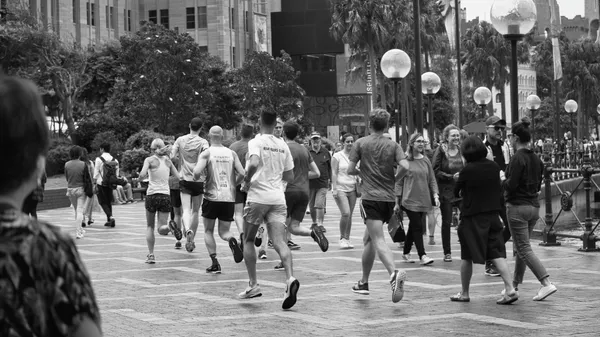
The group spreads out as soon as it leaves the meeting place. Two people continue a conversation side by side. Someone moves ahead while another settles into a position near the back. The gathering that looked compact on the pavement becomes a moving arrangement with gaps that lengthen and close.
From behind, those gaps are hard to ignore. A conversation can appear close enough to join, then move beyond reach while you are still deciding what to say. A familiar jacket becomes a useful point of reference. You notice who looks back and who is absorbed in the person beside them. The route is shared, although the group is experiencing several different versions of it.
I’ve occupied enough positions in this arrangement to recognize how much they change what I notice. Near the front, I can become quite unaware of a conversation happening elsewhere. At the back, I’m often conscious of the full line of people ahead. Their small changes of direction reveal the shape of a bend before I reach it myself.
Who is still with us?
A pause brings the different parts of the run back into view of one another. People turn, look along the route, and work out who is approaching. The first conversation to resume isn’t always the one that was happening before the group spread out. Someone has seen something and wants to point it out while the rest are still gathering.
Waiting has a social texture of its own. It can feel relaxed when people remain part of the same scene, with room to arrive and begin speaking. It can feel less comfortable when the group is already preparing to leave as somebody reaches it. I pay attention to this difference because it is easy to overlook from the position of a person who has been standing there for a while.
There’s a particular generosity in the ordinary question that asks for an actual answer. How did that stretch feel? Did you notice the opening in the wall? A person arriving at the back gets a way into the conversation, and the pause acquires enough substance to feel like part of being out together.
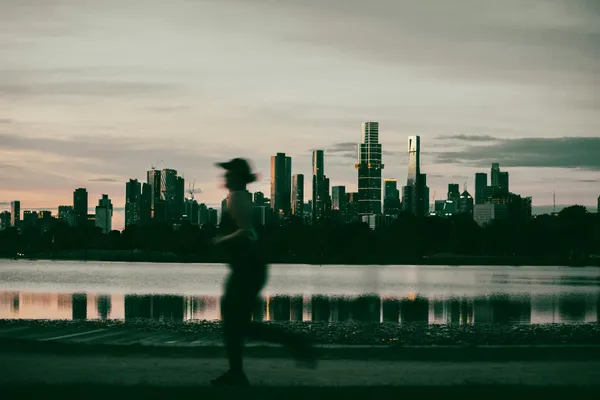
A photograph of runners can hold the distance between people in a way that makes it look fixed. On the route, the arrangement keeps changing. Somebody stops to adjust a sleeve. Two people become separated by a crossing, then find each other again farther along. A person who looked isolated in one moment may have been in conversation just before the shutter opened.
This is why I’m interested in images where the whole group has room in the frame. The relationships between figures become visible, while the photograph leaves their explanations open. You can see the direction people are moving and the spaces they occupy. The individual experience of being in those positions remains something a picture can only partly suggest.
Near the end, the gathering takes on a more compact shape again. Conversations lengthen as people stop checking which turn comes next. Someone begins looking for the place where a bag was left. The route gives way to the ordinary decisions of leaving, and the back of the group disappears as a distinct place to be.
I tend to remember who I spoke with at those pauses. The subject might have been unremarkable, but I can often place the person beside a particular stretch of pavement. When we meet again, it gives us somewhere to begin before the group leaves and starts finding its shape along the road.